How to choose the right helmet
Most of traffic accident fatalities are attributed to head injuries. In a severe accident, your skull may be fractured and your brain may be torn by penetrating objects and bone fragments. Brain injuries can also occur by violent impacts that leave the skull undamaged. To protect yourself against those head injuries, the Snell Foundation urges you to wear a helmet when you are riding.
Finding a good helmet is as easy as remembering the 4 S's:
Snell, Size, Shape, and Strap.

SNELL
First, look for a Snell certified full-face or open-face helmet. There should be a Snell sticker with a barcode inside every Snell certified helmet. When in doubt, check out the helmet name on the Snell certified helmets list. Snell certified helmets provide the best head protection current technology and materials can offer.

SIZE
Second, the size label on each helmet only serves as a general suggestion. A size medium helmet by one company can be bigger or smaller than another size medium helmet by a difference helmet maker. The right sized helmet should not shift on the head.

SHAPE
Third, two people may have the same head size but different shape. People with broad or narrow forehead will have better fitting by trying on helmets from different helmet makers or a different model line from the same helmet company. The best fitting helmet should be snug all the way around the crown of the head. Better fitted helmets reduce head injuries.
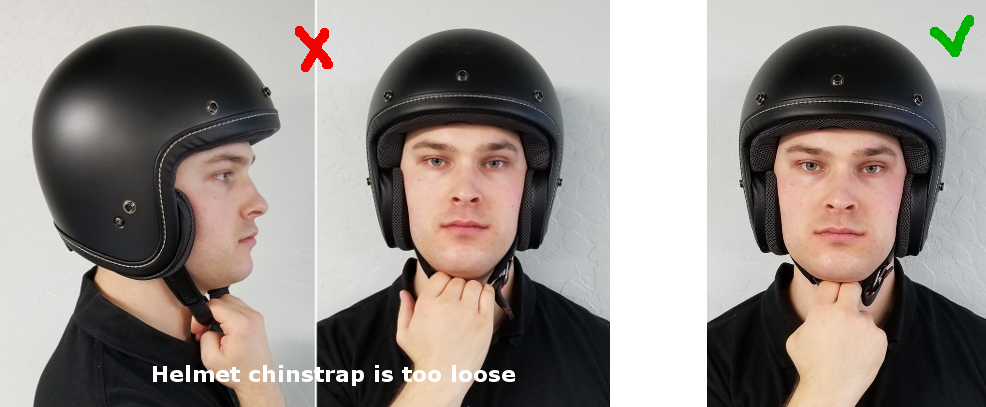
STRAP
Last, always buckle on the strap snugly under the chin. Don’t allow more than two fingers to slide under the strap. Loose strap can cause the helmet to shift too much or even come off the head during a crash.
Video: Helmet needs to fit right
Look at our Helmet Fit Video Tutorial for correct helmet fit: YouTube or download here.
As a personal safety gear, a well fitted helmet will best protect the brain. Snell recommends trying on a new helmet before buying: Cautions for Online Shopping


